

Subscribe to the MEDplus Telegram channel to read us in a convenient format
Heart stenting: what it is and how the procedure is performed
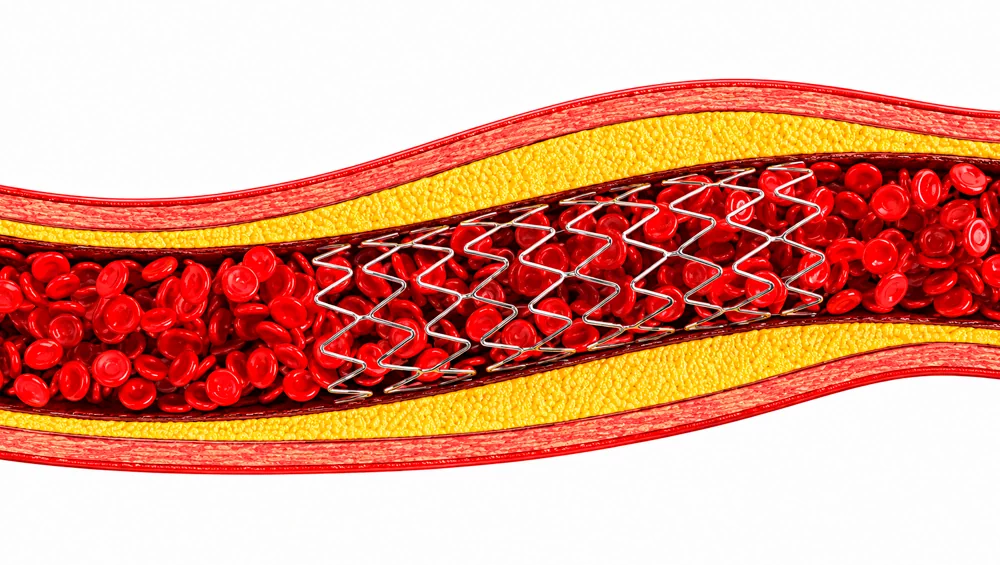
Coronary stenting is the gold standard for treating blocked heart arteries. It’s a minimally invasive procedure that restores blood flow and can prevent serious heart damage. Instead of open-heart surgery, a small metal scaffold called a stent is placed inside the narrowed artery to keep it open. This ensures the heart receives enough oxygen and nutrients to function properly.
Why do arteries get blocked?
Arteries can gradually narrow over time as cholesterol plaques form on their walls. Think of it like mineral buildup in pipes—the more it accumulates, the narrower the passage becomes. Reduced blood flow can cause chest pain (angina) or, in the worst cases, a complete blockage (thrombosis).
As interventional cardiologist Andrii Basatskyi notes in a video on the partner channel COR-Medical Life, a patient feels the consequences of thrombosis already when the mechanism of muscle death is triggered. Heart stenting is a reliable way to prevent permanent damage by reopening the artery early.
Diagnosis before stenting: Coronary angiography
Before placing a stent, doctors need to see the arteries from the inside. Coronary angiography, an X-ray procedure with contrast dye, shows exactly where blockages are.
This test is recommended if:
- There is suspicion of ischemic heart disease.
- The patient experiences chest pressure or discomfort.
- ECG or heart ultrasound indicates reduced blood flow.
Angiography answers a key question: Is medication enough, or is heart stenting necessary to prevent complications?
How is the stenting of the heart done?
The procedure is performed under local anesthesia in a catheterization lab. A small puncture is made in the wrist or groin. A thin catheter is guided to the coronary artery under X-ray control. At the narrowed spot, a balloon is used to open the artery, and a stent is placed to keep it open. Afterward, the catheter is removed, and the puncture site is bandaged.
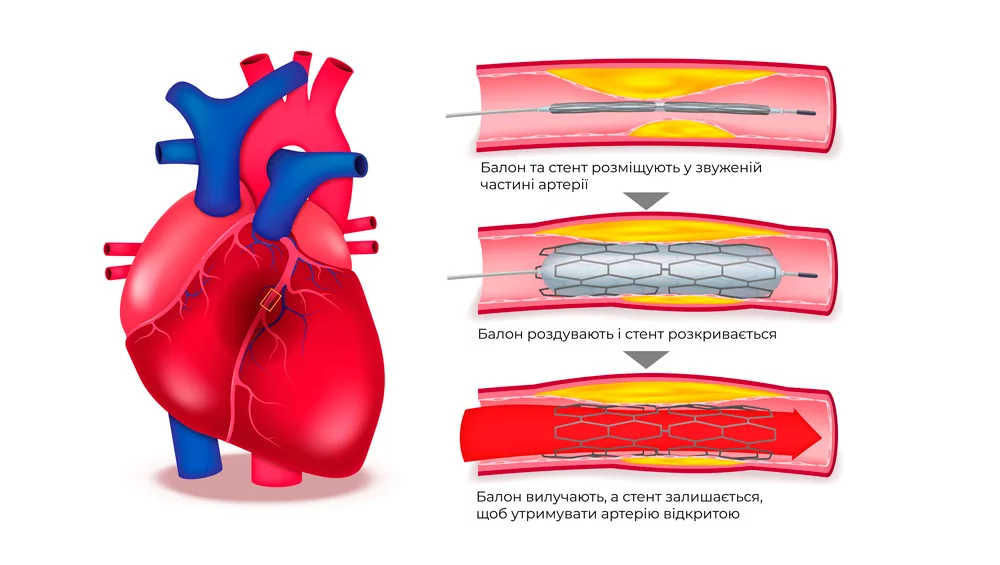
The procedure typically lasts 30–60 minutes, and patients are monitored for a short time afterward.
Types of stents and how to avoid the trap
Drug-eluting stents (DES) are the most commonly used today. They release medication that prevents the artery from narrowing again.
The success of the operation is 50% dependent on the quality of the stent itself. Unfortunately, the problem of a “gray market” for medical devices exists in Ukraine. It is crucial to understand the colossal risks associated with using uncertified products, as they may lack the necessary coating or be made of low-quality alloys.
Main threats:
- Stent thrombosis: The most dangerous complication. Poor-quality coating or alloy defects can trigger sudden blood clotting within the device, leading to acute myocardial infarction.
- Restenosis (re-narrowing): If the stent lacks an appropriate drug coating or was placed in violation of technology, the vessel quickly overgrows with connective tissue, and the patient requires surgery again.
- Inflammatory processes: Cheap alloys can cause allergic reactions or chronic inflammation of the arterial wall, destroying the vessel from within.
Mechanical destruction: An uncertified product can be fragile. During balloon inflation, the balloon may break or fail to expand fully, leading to arterial injury.
Important: To protect yourself, we advise you to read “A Stent with No Guarantees: How to Avoid Falling into the Gray Market Trap.” Remember, saving money on the quality of metal in your vessels can cost you your life.
Recovery and risks: What to expect after surgery
Most patients feel better quickly after heart stenting. Mild soreness, fatigue, or slight weakness in the first days is normal.
According to interventional cardiologist Andrii Basatskyi, the metal structure must be covered with the body’s own tissues, which takes from 6 months to a year. During this period, taking antithrombotic therapy is critically important. Watch more details in the video: “Complications after Stenting”.
Follow your doctor’s guidance closely on how to behave in the first days: monitor the puncture site, avoid heavy lifting, hot baths, or strenuous activity during early recovery. Mild chest discomfort is normal, but severe pain requires immediate medical attention.
Recovery timelines vary:
- Planned procedures: 3–7 days.
- After a heart attack: several weeks under medical supervision.
Life after stenting: Exercise and physical activity
Should you exercise? You shouldn’t just exercise, you must! The heart is a muscle, and it needs training.
Properly dosed physical activity after stenting is critically necessary to strengthen the cardiovascular system and increase overall endurance. Specialists recommend starting with daily outdoor walks lasting 30 to 40 minutes. One year after stenting, if symptoms of ischemia do not return, activities such as sports, sauna, flights, and even MRIs are usually safe.
Life after stenting can be fully active, with few restrictions. The main things to remember are a balanced diet and regular check-ups with a cardiologist.

This information is for informational purposes only. Be sure to consult your doctor before making any decisions regarding treatment.
Frequently asked questions from patients about coronary stenting
Does it hurt?
Heart stenting is performed under local anesthesia, so patients usually feel no pain. Since access to the heart is obtained via peripheral vessels (e.g., the arm or leg), deep general anesthesia is unnecessary. Brief discomfort or soreness at the puncture site is common and temporary. At the moment of balloon inflation inside the coronary artery, a sensation of short-term expansion or warmth in the chest is possible, but it passes completely within a few seconds.
How many stents can be placed at once?
In world surgical practice, there is no strict mathematical limit on this matter. The number of implanted devices depends directly on the overall clinical picture: the extent of the atherosclerotic lesion, the length of the plaques, and the number of vessel branches critically affected.
Do stents need replacement?
No, a modern stent is implanted for life. It grows deep into the anatomical structure of the vessel wall, becomes covered with endothelium, and becomes an integral part of it. It is physically impossible to “pull it out” or “replace” it. Long-term success relies on following the medication and the doctor’s recommendations.
Is re-narrowing of the vessel possible?
The risk of re-narrowing (restenosis) is minimal when high-quality drug-eluting stents are used. Most often, complications occur in case of unauthorized discontinuation of antithrombotic therapy or ignoring follow-ups with a cardiologist.
Will I need lifelong medication?
Yes, blood-thinning drugs are essential to prevent blood clots. Medications for blood pressure, cholesterol, and heart rhythm may also be prescribed. The treatment regimen may change over time, but never stop them without a doctor’s approval.
When can I return to work?
- Office work: 7–10 days after a planned procedure.
- Physically demanding jobs: If your job involves heavy lifting, intense physical activity, or extreme conditions, recovery takes longer and requires additional check-ups before returning to full duty.
Does stenting affect life expectancy?
Stenting the heart reduces symptoms and improves prognosis, especially after a heart attack. With proper follow-up, risk management, and regular medical observation, patients can live long, active, and fulfilling lives.
Do you like the article?
Ratings: 0


Thank you for subscribing!