
Subscribe to the MEDplus Telegram channel to read us in a convenient format
Radiofrequency Ablation in Various Types of Cancer: Modern Indications
People often perceive cancer treatment as a complex surgery, prolonged hospitalization, and a lengthy recovery. However, modern oncology offers less traumatic approaches. One of them is radiofrequency ablation (RFA), a minimally invasive method that, in certain clinical cases, allows for the destruction of a tumor without major surgical intervention.
However, RFA is not a universal treatment method and is not suitable for all patients. In which cases it is used, what advantages and limitations this method has, and what you should know before the procedure — read in the MEDplus article.
How the Method Works
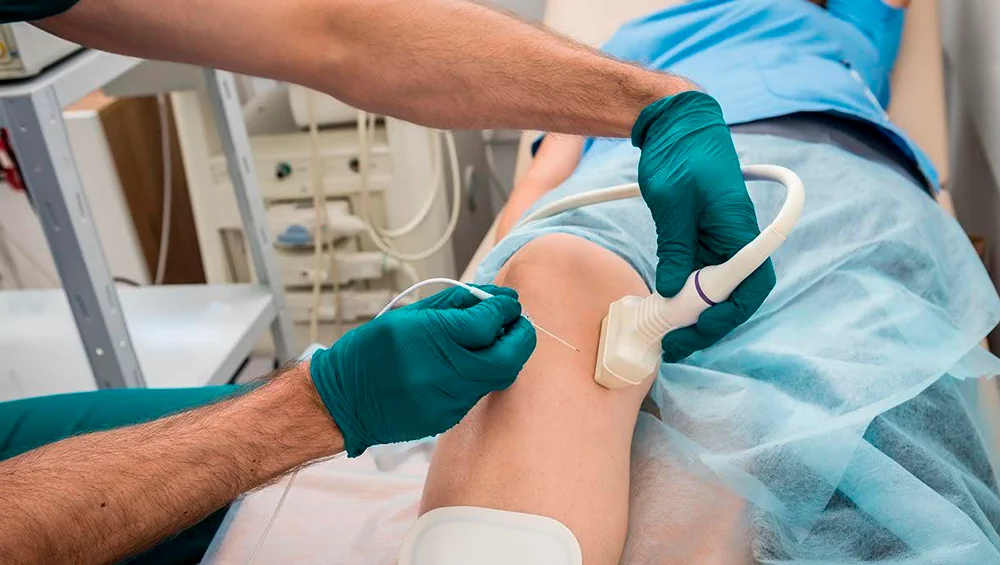
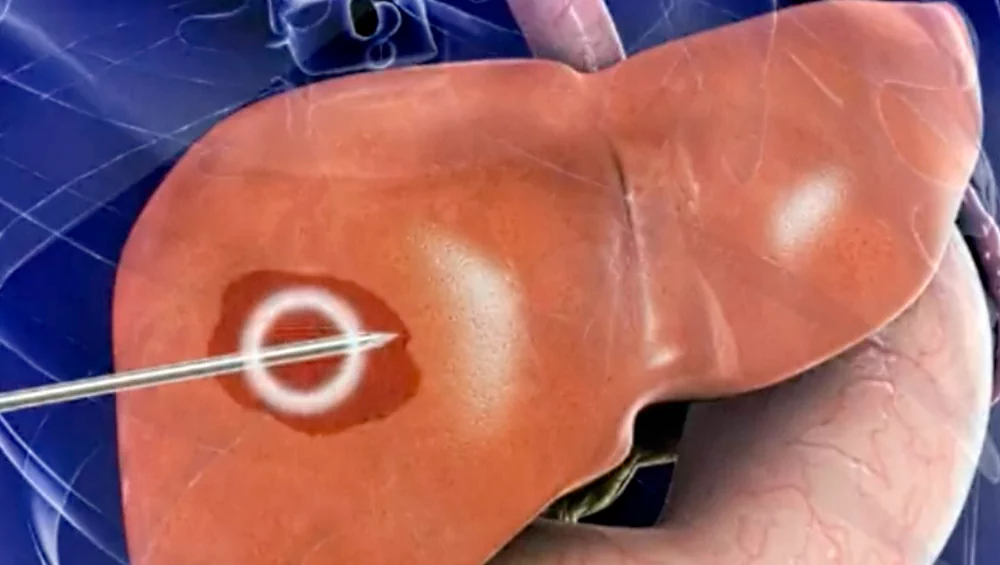
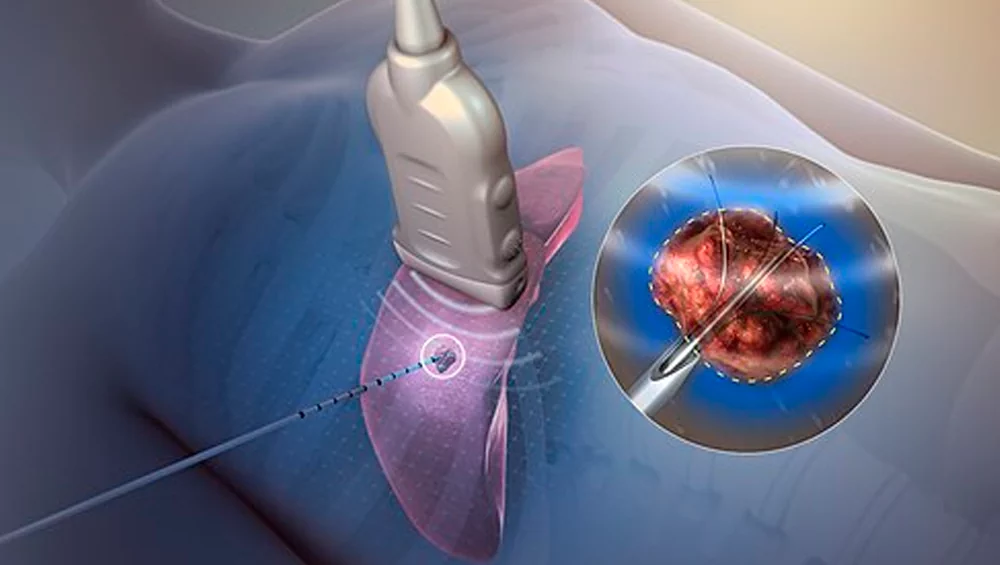
Radiofrequency ablation is a minimally invasive procedure during which a doctor inserts a special electrode into the tumor through a small puncture. Under the guidance of ultrasound or computed tomography, it is precisely placed inside the neoplasm.
A high-frequency current is supplied through the electrode, heating the tumor tissue to a temperature above 60°C. As a result, tumor cells are destroyed, while the surrounding healthy tissues are preserved as much as possible.
The absence of a large incision makes this method less traumatic than open surgery.
Why the Tumor Is Destroyed Without a Large Incision
The needle is so thin that it requires only a small puncture in the skin — just like a regular injection or a biopsy puncture. Thanks to a clear image on the CT or ultrasound monitor, the doctor sees every step and acts very precisely: destroying only the tumor while leaving the surrounding healthy tissues unharmed.
How Radiofrequency Ablation Differs from Classical Surgery
In classical surgery, the surgeon must make a large incision to reach the organ and remove part of it along with the tumor. After this, the patient undergoes a long recovery. RFA does not require incisions, leaves no scars, and is performed much faster and more gently.
Radiofrequency ablation does not replace absolutely all treatment methods in oncology, but in many cases, it serves as an excellent bloodless alternative to surgery.
In Which Types of Cancer Radiofrequency Ablation Is Used
Liver Tumors
The liver is an organ that is extremely important to preserve as much as possible. If cancer is detected at an early stage, the RFA procedure allows for the precise, complete ablation of the neoplasm while leaving the healthy part of the liver to function normally.
Metastatic Liver Involvement
It often happens that cancer cells spread to the liver from other organs (for example, the intestines). If there are few such foci and they are small, targeted heating helps quickly stop their development.
Certain Kidney Tumors
In cases of kidney neoplasms, it is crucial to preserve excretory function. Using this procedure, a doctor can remove the node without removing the kidney itself.
Certain Lung and Bone Neoplasms
If a tumor is located such that performing open surgery on the lungs is too risky, or if a cancer lesion in the bones causes severe pain, this method helps quickly bring the situation under control and relieve the patient’s condition.
Important: The final decision on whether this method is suitable for you is always made by a team of specialists (surgical oncologist, radiologist, and medical oncologist/chemotherapist).
When a Doctor May Recommend This Treatment Method
The method works best when the node is small in size — usually up to 3–3.5 centimeters.
Also, if it is impossible to perform open surgery — for example, if the node is in a hard-to-reach area or near major blood vessels where a surgical knife could cause damage — the doctor will prefer targeted ablation.
If the patient is elderly or has concomitant diseases (for example, a weak heart or blood pressure problems), classical surgery under general anesthesia can be dangerous. In such cases, RFA becomes the safest option.
In addition, the RFA procedure is often combined with chemotherapy or radiation therapy to achieve maximum results.
What Are the Advantages of Radiofrequency Ablation
Choosing the advantages of radiofrequency ablation, patients note, above all, comfort and safety:
Minimal tissue trauma: no incisions, scalpels, blood, or large scars.
Shorter recovery period: no need to stay in bed for weeks — usually, the patient returns home to family and daily activities on the same day or the following morning.
Less postoperative pain: after the procedure, the person does not experience severe pain and does not require strong painkillers.
That is why modern cancer treatment methods make it possible to fight the illness without unnecessary stress on the body. But it is important to remember that the earlier the disease is detected, the greater the chances of using the RFA method.
Is Radiofrequency Ablation Suitable for All Patients
This method is not a panacea. If the tumor is too large (over 5 cm) or if there are too many of them throughout the body, the procedure may be ineffective.
Before prescribing the procedure, the doctor will definitely order detailed blood tests, as well as an ultrasound, CT, or MRI, to accurately determine the size and boundaries of the tumor.
However, every person’s body is unique. What worked perfectly for one patient may not yield the desired effect for another. Therefore, the strategy is always selected individually.
Radiofrequency Ablation as Part of Modern Oncology
A modern approach to treatment is always a team effort. For example, targeted ablation destroys the primary node, while chemotherapy drugs clear away individual cancer cells in the blood.
Modern cancer treatment is becoming more personalized. Medicine is moving away from old standards where everyone was treated the same. When choosing modern cancer treatment, doctors look for a way that will bring the greatest benefit to the patient with the least strain on their health.
What Is Important for the Patient to Know
Radiofrequency ablation has become a true breakthrough in modern oncology. It gives patients the opportunity to overcome a tumor quickly and effectively without prolonged suffering and complex recovery. It is important for the patient to understand that major surgery is not always necessary in oncology. Of course, the RFA method has its clear medical limitations and indications, but the procedure can be successfully combined with other types of treatment.
If you or your loved ones have been diagnosed with a neoplasm, be sure to consult a doctor regarding the possibility of using this bloodless method. The main thing is to see a doctor in time, because in the early stages, the disease is much easier to overcome.
Do you like the article?
Ratings: 0


Thank you for subscribing!