Subscribe to the MEDplus Telegram channel to read us in a convenient format
How Dangerous Are Abdominal Hernias: Symptoms and Complications
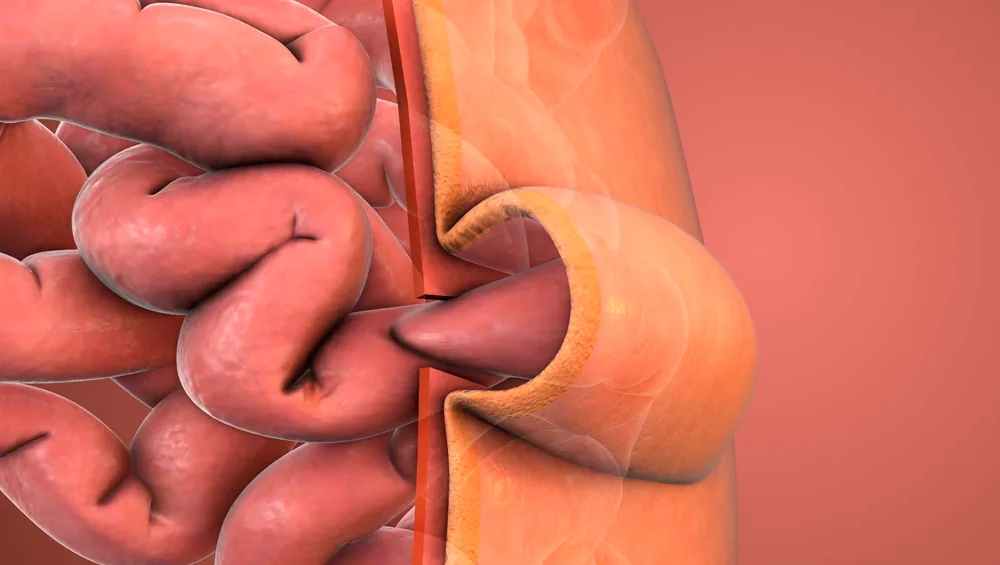
An abdominal hernia is a condition in which internal organs or parts of them protrude beyond the abdominal cavity through weakened areas of the muscles or connective tissue of the abdominal wall. Normally, the muscles and fascia—connective tissue membranes that surround muscles and organs—keep the intestines, omentum, and other organs inside the abdomen. When this barrier weakens, pressure from the abdominal contents creates a bulge known as a hernial sac.
The protrusion of organs develops as follows: increased pressure inside the abdominal cavity pushes against the wall from within. If an area of muscles or fascia is congenitally weak or damaged, the tissues gradually stretch and separate. Over time, a hernial sac — a membrane formed from the peritoneum, the thin serous membrane lining the abdominal cavity and covering the organs — is pushed through the opening. The sac may contain the omentum, intestinal loops, or part of the bladder. This is how a hernia forms.
Main Causes of Abdominal Hernias
An abdominal hernia does not develop without a cause. Its formation is associated with two key factors: increased intra-abdominal pressure and weakened abdominal wall.
Increased intra-abdominal pressure may result from any condition that raises abdominal pressure and strains the abdominal muscles. Such conditions include chronic coughing caused by bronchitis or pulmonary emphysema, frequent constipation requiring excessive straining, lifting heavy objects with improper technique, obesity, pregnancy, and difficulty urinating because of prostate diseases in men.
Weakness of muscles and connective tissue may be congenital, for example, because of incomplete closure of certain structures during fetal development. Muscles may also atrophy due to a sedentary lifestyle, aging, rapid weight loss, or previous abdominal surgeries, during which incisions disrupt tissue integrity.
Risk Factors in Men and Women
Inguinal hernias are significantly more common in men due to anatomical factors. In men, the inguinal canal — the passage through which the spermatic cord travels in the lower abdominal wall — remains naturally weaker after the testicles descend into the scrotum during fetal development. This creates a naturally vulnerable area. Femoral hernias, on the other hand, occur predominantly in women, especially after childbirth, due to pelvic anatomy and age-related stretching of ligaments. However, both types may occur in either sex.
Symptoms of Abdominal Hernias
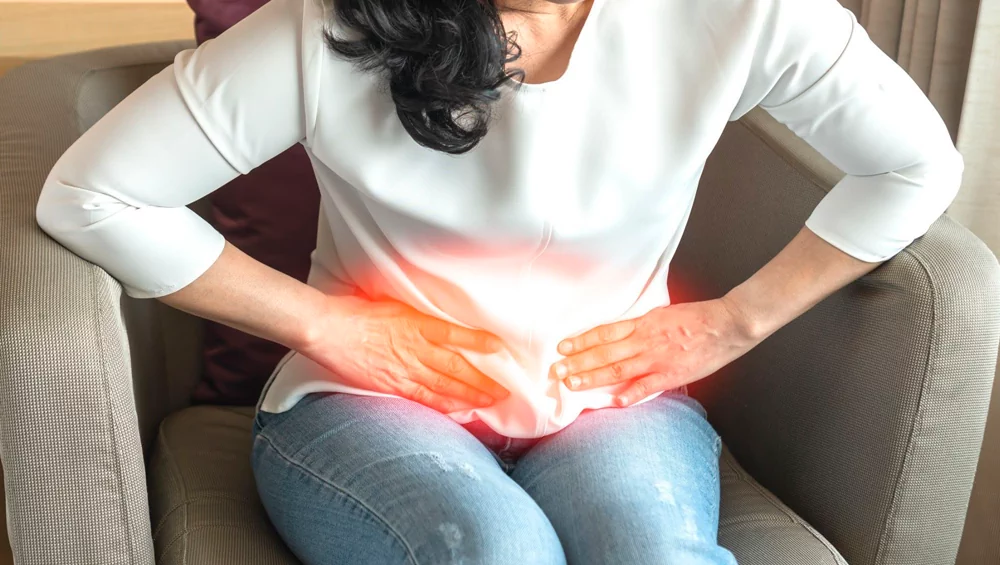
Early recognition of a hernia provides a chance to avoid complications. The first signs are usually a bulge in the groin, navel, thigh, or at the site of a postoperative scar. The bulge appears during strain — coughing, lifting heavy objects, or sneezing — and disappears when lying down or with gentle pressure. It is accompanied by discomfort, heaviness, or a pulling pain in the affected area.

Symptoms of an inguinal hernia in men appear as a bulge in the groin fold that may extend into the scrotum. Pain intensifies during walking, physical activity, or prolonged standing. In severe cases, pressure on the spermatic cord may cause pulling pain in the groin and a deterioration in overall well-being.
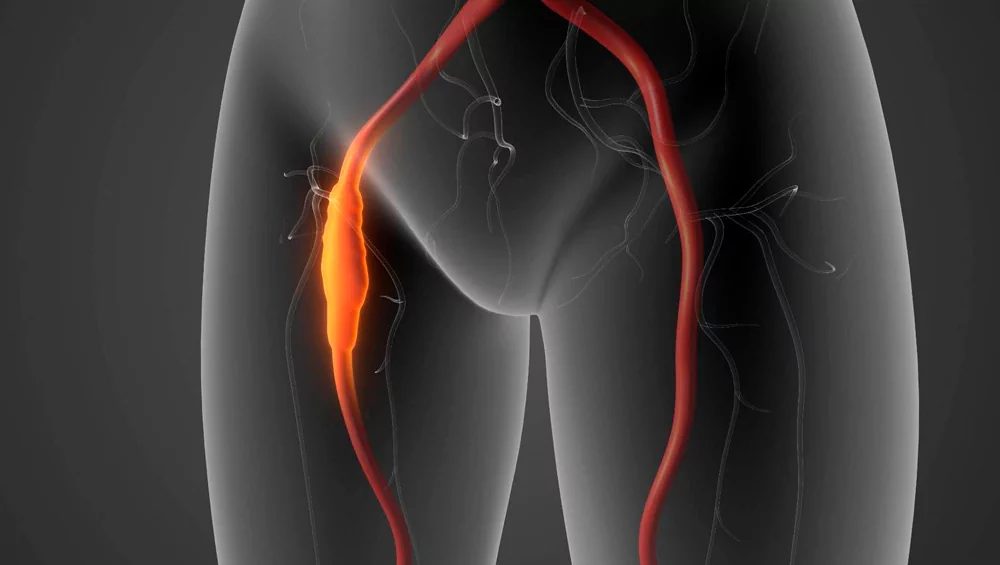
Femoral hernias in women are located below the inguinal ligament on the inner surface of the thigh. Because of their deep location, femoral hernias are more difficult to detect. Women often complain of pain and a feeling of heaviness in the thigh that worsens while walking. The hernia may compress major blood vessels and nerves of the thigh, causing leg swelling and impaired sensation.
Why Abdominal Hernias Are Dangerous
A hernia is not merely a cosmetic defect. It is a progressive condition that threatens health. Impaired blood circulation to organs occurs when the hernial opening — the defect through which the organs protrude — compresses the blood vessels supplying the tissues. When blood flow decreases, cells do not receive enough oxygen and nutrients. If this continues for a long time, ischemia develops, meaning impaired blood supply, followed by necrosis, or tissue death.
When the damaged tissues of the hernial sac become inflamed, pain, swelling, and redness of the skin over the bulge appear. In severe cases, the inflammation spreads into the abdominal cavity.
Over time, the hernial opening stretches and more organs enter the sac, leading to gradual enlargement of the hernia. Large hernias are more difficult to reduce, limit mobility, worsen quality of life, and significantly complicate further treatment.
The Most Dangerous Complication: Strangulation
A strangulated hernia occurs when the hernial opening compresses an organ so tightly that it cannot return to the abdominal cavity. Blood supply stops completely. This is a surgical emergency. Most commonly, the intestine becomes strangulated; less often, the omentum.
Symptoms of this dangerous condition include sharp, intense pain in the area of the hernia that does not subside. The bulge becomes firm and cannot be pushed back in. The skin over it turns red or bluish. Nausea, vomiting, abdominal bloating, and absence of gas or stool are signs of intestinal obstruction. General weakness, tachycardia (rapid heartbeat), and fever may also occur.
Emergency medical care is required immediately if strangulation is suspected. Every hour of delay increases the risk of tissue necrosis. Surgery must be performed within a few hours. Otherwise, peritonitis — inflammation of the peritoneum — develops, often leading to sepsis, or a systemic blood infection, and may be fatal.
Other Possible Complications
Intestinal obstruction develops if the strangulated intestinal loop and its contents cannot move further through the bowel. The intestine stretches, its walls swell, and fluid absorption becomes impaired. This causes severe pain, vomiting, abdominal bloating, and dehydration. Without surgery, the intestinal wall may rupture.
Peritonitis occurs when the strangulated intestine ruptures or necroses, allowing intestinal contents and bacteria to leak into the abdominal cavity. The peritoneum becomes inflamed. Peritonitis is characterized by severe abdominal pain, muscle rigidity, fever, and a rapid pulse. This life-threatening condition requires immediate surgery and intensive antibiotic therapy.
Chronic pain may occur even without strangulation, as constant tissue stretching and pressure on organs cause persistent discomfort. This limits physical activity, worsens sleep, reduces work capacity, and may contribute to depressive conditions.
Why Hernias Should Not Be Ignored
A hernia does not disappear on its own. It is an anatomical defect and a structural change in the abdominal wall. Muscles and fascia cannot restore their integrity independently. On the contrary, the opening gradually enlarges, the muscles become even more atrophied, and the hernia increases in size.
The hernia enlarges over time due to constant internal pressure, even during everyday activities such as coughing, bowel movements, or walking. This gradually widens the hernial opening. Organs entering the sac pull additional tissues with them. The larger the hernia, the higher the risk of complications.
Delaying treatment may lead to serious consequences. Patients often postpone treatment, hoping the bulge will disappear or fearing surgery. However, early surgery for a small hernia is relatively simple, performed electively, associated with minimal risk of complications, and requires only a short recovery period. Otherwise, an elective procedure may become an emergency operation with a high risk of strangulation, necrosis, and peritonitis.
Treatment of Abdominal Hernias
Surgery is required for any hernia that causes pain, enlarges, or cannot be reduced. Children with umbilical hernias may sometimes be monitored until a certain age, but in adults, surgery is almost always indicated because it is the only radical treatment method.
Non-surgical treatment, which patients often ask about, does not eliminate the hernia but may relieve symptoms or help prepare for surgery. For example, this includes wearing a hernia belt or abdominal binder to support the protrusion and reduce discomfort temporarily. This is acceptable only when there are contraindications to immediate surgery, such as severe coexisting diseases. However, a binder does not cure a hernia; it only slows its progression. Attempting to reduce a hernia at home is dangerous because it may lead to strangulation.
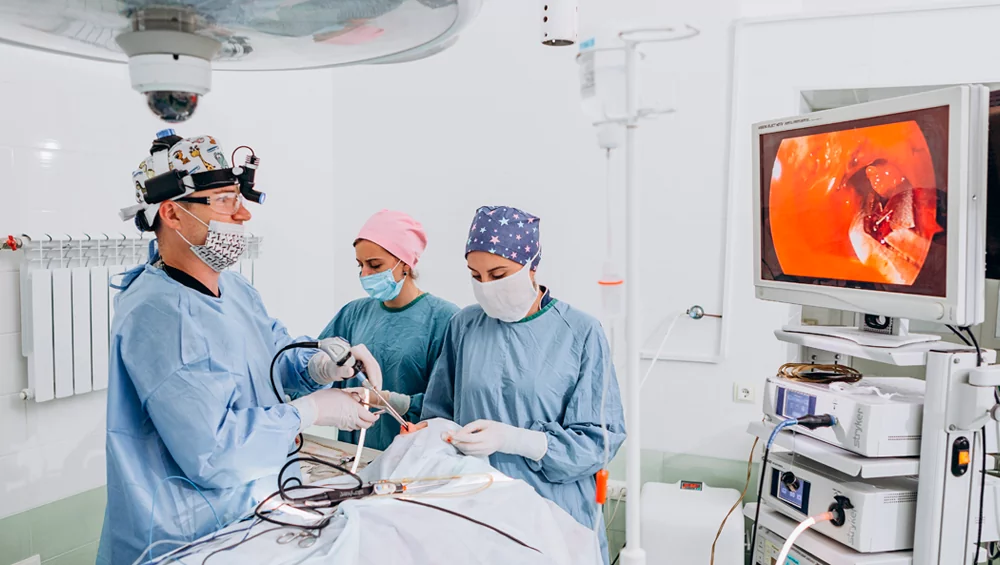
Modern surgical techniques include open and laparoscopic procedures. During open surgery, the surgeon makes an incision in the hernia area, returns the organs to the abdominal cavity, and reinforces the defect using the patient’s own tissues or a synthetic mesh, usually polypropylene. Laparoscopy involves several small punctures using a camera and surgical instruments. It is less traumatic, reduces postoperative pain, and shortens recovery time. The choice of technique depends on the size and location of the hernia, the patient’s age, and the presence of accompanying diseases.
Regardless of whether the approach is open or laparoscopic, the surgeon must close the abdominal wall defect. In the past, patients’ own tissues were used for this purpose, but in large hernias or in patients with tissue weakness, these tissues often stretched again, leading to recurrent hernias. Today, the primary reinforcement method is surgical mesh. It creates a reliable framework, distributes tension evenly, and stimulates the growth of the patient’s own connective tissue. Over time, the mesh integrates into the body, forming a strong protective barrier that significantly reduces the risk of recurrence.
Meshes differ depending on their material and design, for example:
- The Symbotex composite mesh by Medtronic combines strength and biocompatibility. Polypropylene, due to its structure, provides rigidity and resistance to infection, while polyester improves elasticity and reduces discomfort during movement. Such meshes are often used for large or recurrent hernias that require enhanced reinforcement.
- The ProGrip self-fixating surgical mesh by Medtronic is an alternative with a softer structure. These meshes contain special microgrips along the edges that attach to tissues and keep the mesh in place without additional sutures. This shortens surgery time, reduces tissue trauma, and lowers the risk of implant displacement during the postoperative period. Polypropylene is a synthetic material that does not dissolve in tissues and maintains its shape for years. Polyester is less rigid than polypropylene, making such meshes more suitable for areas where flexibility is important, for example, in femoral hernias or in patients with increased sensitivity to pressure.
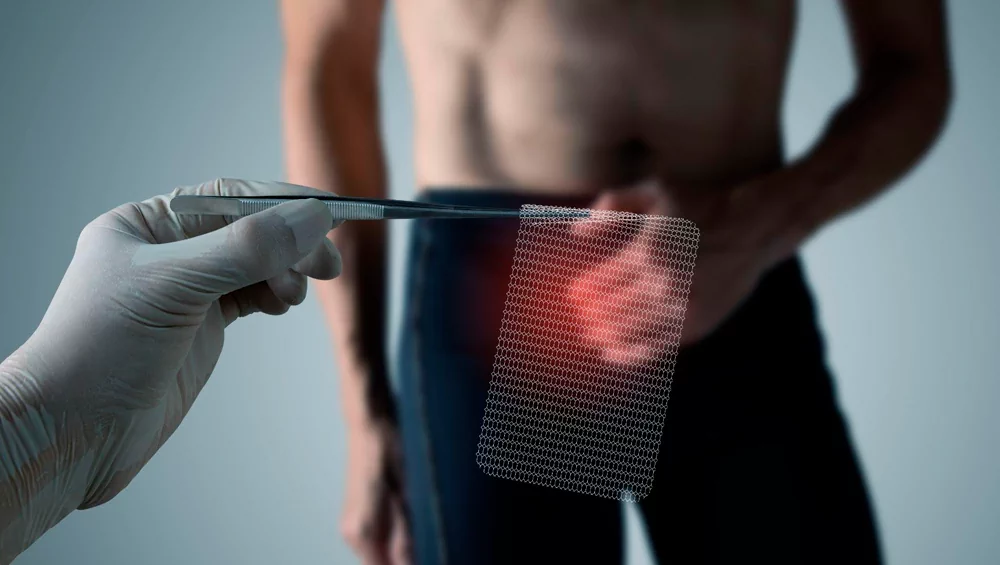
Both types of self-fixating meshes allow the surgeon to position the implant accurately and avoid complications associated with displacement. The choice of a specific mesh type depends on the size and location of the hernia, the patient’s condition, and the presence of accompanying diseases. The surgeon evaluates all these factors during surgical planning.
You can learn more about modern approaches to hernia surgery from the following video materials:
Hernia Prevention
Prevention aims to reduce risk factors.
- Control of physical activity includes proper lifting techniques for heavy objects: keeping the weight close to the body, engaging the abdominal muscles, and avoiding sudden jerking movements. In cases of chronic cough or constipation, it is important to consult a doctor for treatment of the underlying condition, as constant abdominal strain can contribute to hernia formation.
- Strengthening muscles is achieved through regular moderate abdominal exercises such as planks, slow crunches, and “bicycle” exercises, which improve the tone of the abdominal wall muscles. However, excessive exertion in the presence of existing weakness may have the opposite effect. A physician or physical therapist should select an exercise program according to individual characteristics.
- Maintaining a healthy weight is important because obesity increases intra-abdominal pressure and stretches the muscles. Weight reduction to normal levels decreases this strain. It is also important to avoid rapid weight gain, particularly during pregnancy, and to monitor conditions associated with fluid retention.
Conclusion: When to See a Doctor
Warning signs that require consultation with a surgeon include any bulge in the abdomen, groin, navel, or thigh area. Immediate medical attention is necessary if the protrusion suddenly becomes painful, firm, and irreducible, changes the color of the skin above it, or is accompanied by nausea, vomiting, abdominal bloating, or the absence of bowel movements.
The importance of early diagnosis lies in the fact that a hernia detected early can be treated electively and with minimal risk. Ultrasound or computed tomography allows accurate assessment of the hernia’s size, contents, and the condition of the hernial opening. Early consultation with a surgeon allows for the choice of the optimal treatment and avoids dangerous complications. It is not worth waiting until the hernia becomes strangulated—at that point, treatment becomes urgent, more complicated, and associated with a significantly higher risk to health and life.
Do you like the article?
Ratings: 0


Thank you for subscribing!