
Subscribe to the MEDplus Telegram channel to read us in a convenient format
Lyudmyla’s Story: How Modern Postoperative Hernia Treatment Restored Her Quality of Life
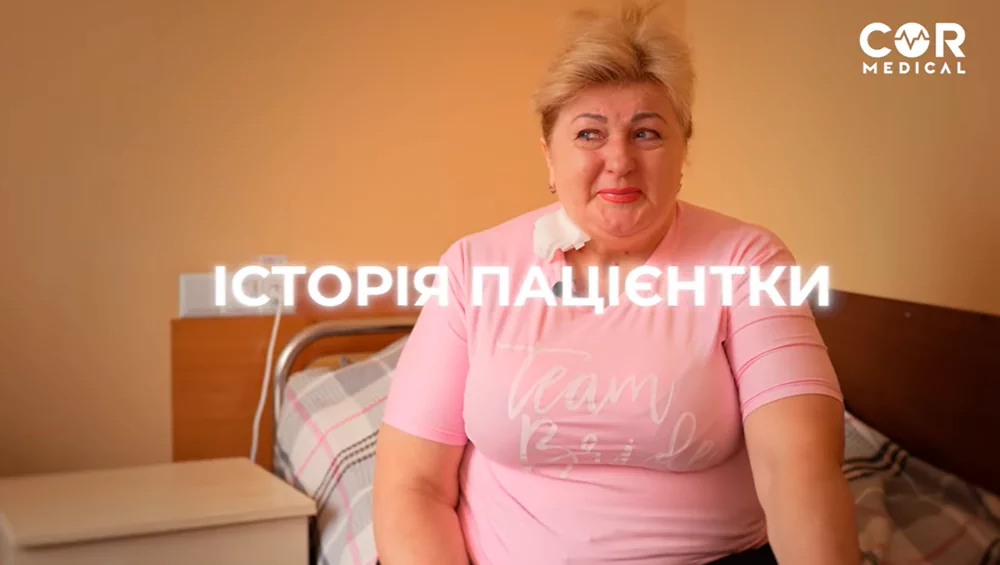
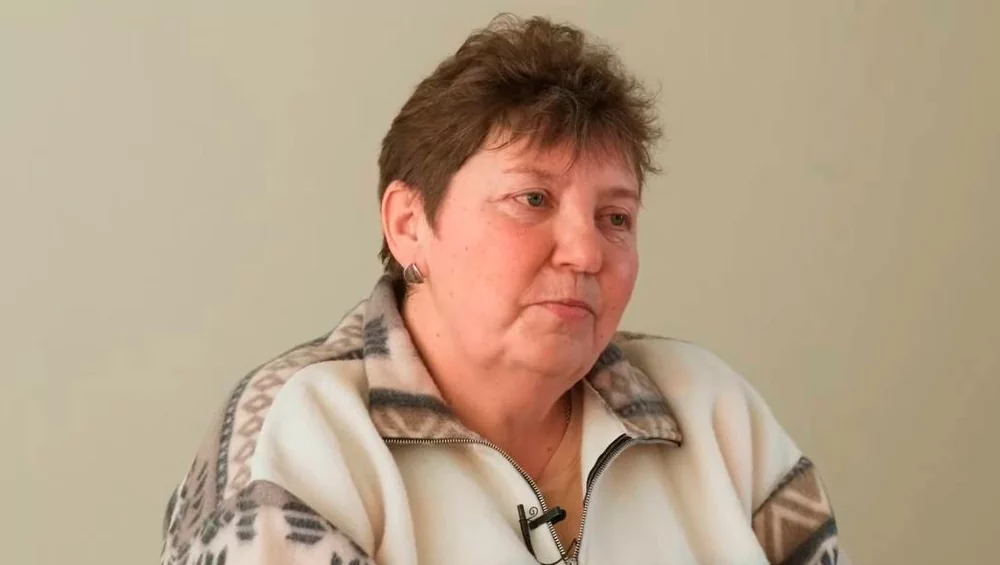
“Honestly, when I came here, I thought I probably wouldn’t return,” Lyudmyla recalls about her trip to Kyiv for another surgical treatment.
By that time, she had already undergone several surgeries, spent a long time in the hospital, and faced a difficult recovery. After her previous procedures, Lyudmyla developed a large postoperative hernia and a purulent fistula of the anterior abdominal wall. She was also still dealing with excess weight following a previous bariatric procedure.
Lyudmyla turned to Professor Oleksandr Yuliiovych Ioffe, a surgeon specializing, among other areas, in abdominal and bariatric surgery, with several problems that required a comprehensive approach.
When Everyday Life Becomes a Daily Challenge
Lyudmyla’s story began with a severe cough and pain on her left side. At first, she was treated for bronchitis, but her condition did not improve. The cough became so severe that it was difficult for her to move around, travel to work, and carry out everyday activities.
Later, Lyudmyla was advised to undergo a CT scan. The examination revealed a hernia, and she was referred for surgery.
According to Lyudmyla, the first procedure she underwent in Zhytomyr did not produce the expected result. Just four days later, she required another operation. In total, she spent around two and a half months in the hospital, and her temperature rose to 40°C.
After this treatment, new problems emerged: Lyudmyla developed a large postoperative hernia of the anterior abdominal wall and a purulent fistula. Earlier, she had also undergone gastroplasty, a bariatric procedure performed to treat obesity. However, the result in terms of weight loss was unsatisfactory.
By the time she turned to Oleksandr Ioffe, the medical team had three tasks to address: eliminate the purulent fistula, reconstruct the anterior abdominal wall, and perform a repeat bariatric procedure.
Postoperative Hernia: Why Does It Develop After Surgery?
A postoperative hernia develops when a weak area or defect forms in the abdominal wall at the site of a surgical incision. Internal tissues and organs may protrude through this weakened area.
The risk of developing a postoperative hernia may increase if complications occur after surgery or if normal tissue healing is disrupted. For this reason, postoperative hernias can vary significantly in size and complexity.
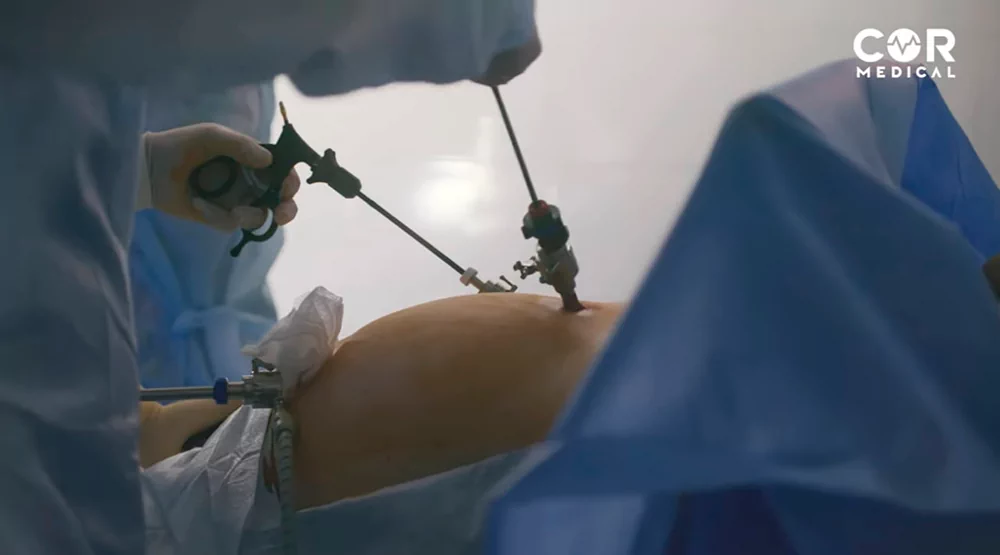
In Lyudmyla’s case, the problem had already become significant: the width of the hernia defect exceeded 20 centimeters. Simply bringing the edges of such a large defect together and suturing the abdominal wall could have created excessive tension on the tissues.
As Professor Oleksandr Ioffe explained, simply closing such a large defect could have significantly increased intra-abdominal pressure. This could have caused breathing difficulties and impaired blood supply to the internal organs. That is why Lyudmyla was not taken directly to the main operation. First, the abdominal wall had to be prepared for the upcoming reconstruction.
When Hernia Treatment Becomes Especially Complex
Lyudmyla did not have a single problem that could be resolved with a standard hernia repair. First, there was a significant defect of the anterior abdominal wall. Second, she had a purulent fistula, a pathological channel that developed as a complication after previous surgeries. Third, her excess weight also needed to be addressed through a repeat bariatric procedure.
It was the combination of these problems that made the case particularly complex. Lyudmyla had previously been refused treatment at other clinics because addressing all three issues during a single surgical procedure was challenging. In Kyiv, a step-by-step treatment plan was developed for her. Preparation for the main complex surgery lasted three months.
How the Doctors Prepared for a Complex Surgery
One of the key stages of preparation was the injection of botulinum toxin into the muscles of the anterior abdominal wall. This procedure was performed for Lyudmyla in July 2025.
The goal was to relax the abdominal wall muscles before the upcoming surgery. This helped reduce tissue tension when closing the large hernia defect and avoid a sharp increase in intra-abdominal pressure.
More than a month after the botulinum toxin injection, Lyudmyla underwent the main operation. During a single procedure, the surgical team needed to eliminate the fistula, perform a repeat bariatric surgery, and reconstruct the anterior abdominal wall.
Hernia Repair and Anterior Abdominal Wall Reconstruction: What Was Done During the Surgery
During the main procedure, Lyudmyla underwent three operations at the same time. First, the surgeons excised the purulent fistula. Next, they performed a mini gastric bypass, a repeat bariatric procedure. The third stage involved repairing the large postoperative hernia.
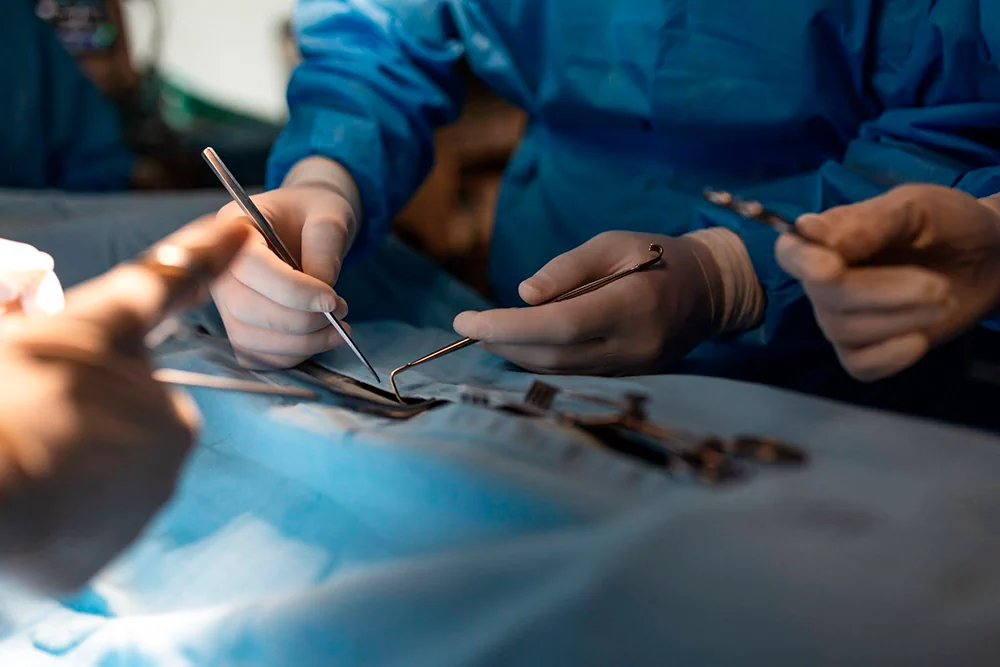
The IPOM technique was used to reconstruct the anterior abdominal wall. This is a type of hernia repair in which a mesh implant is placed on the inner side of the abdominal wall to strengthen it.
In Lyudmyla’s case, a biological mesh was used. According to Professor Oleksandr Ioffe, this material was chosen because of the risk of infection associated with the purulent fistula. The use of a biological mesh made it possible to complete the entire planned treatment during a single operation.
The First Days After Surgery
Lyudmyla’s recovery began almost immediately. Approximately two hours after the operation, she began getting up and moving around near her bed. This approach is part of an enhanced recovery protocol after surgery. Its goal is to help patients return to activity as early as possible and reduce the risk of postoperative complications.
After discharge, Lyudmyla was advised not to lift more than 5 kilograms for three months while the tissues recovered. Her sutures were scheduled to be removed 10–14 days after surgery, depending on the healing process. A follow-up examination and an ultrasound of the anterior abdominal wall were also recommended one month after the operation.
Her diet and weight changes also needed to be monitored following the mini gastric bypass. Lyudmyla received recommendations on a balanced diet developed with input from dietitians. One month after the operation, she had lost 20 kilograms. According to the surgeon, no postoperative complications were observed during this period, and Lyudmyla had already returned to her usual way of life.

What People with a Postoperative Hernia Should Know
A postoperative hernia does not always look the same as Lyudmyla’s. Its size, the condition of the tissues, and the presence of complications can vary. These factors determine the appropriate treatment approach.
If a bulge appears in the area of a surgical scar, it is advisable to consult a surgeon and undergo an examination. There is no need to wait until the hernia becomes large or begins to significantly affect everyday life.
In a planned setting, a doctor can assess the size of the defect, evaluate the condition of the tissues, and determine the appropriate treatment strategy. In Lyudmyla’s case, extensive preparation and complex surgery were required, but the scope of treatment may be completely different in other cases.
A Story That Gives Hope
Even before the operation, Lyudmyla admitted that she was afraid to undergo treatment. After everything she had experienced during the previous year, another complex procedure was not an easy decision for her.
But one month after the operation, the situation had improved. Lyudmyla had lost 20 kilograms without harm to her health, no postoperative complications had been observed, and she had returned to her usual way of life.
Lyudmyla’s story is not about solving a complex problem with one universal method. In her case, the outcome was preceded by lengthy preparation, several stages of treatment, and a major operation during which three different problems were addressed at the same time.
That is why it is important not to ignore a postoperative hernia. The earlier a person consults a surgeon, the sooner the situation can be assessed and the appropriate treatment determined.
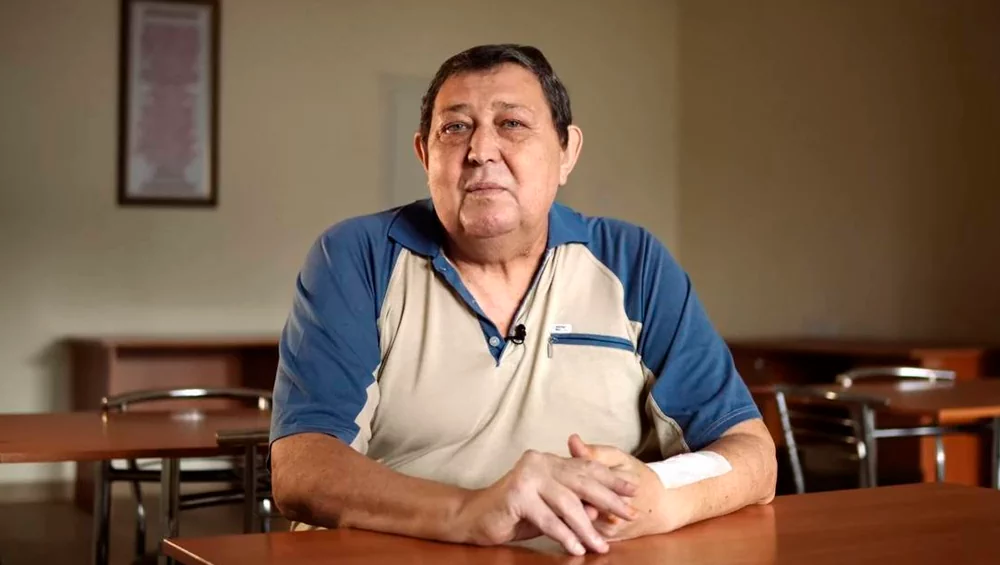
“You know, tears, joy, and tears,” Lyudmyla said, describing her emotions after treatment.
Learn more about Lyudmyla’s treatment in the video “Patient Stories After Complex Surgeries.”
Do you like the article?
Ratings: 0


Thank you for subscribing!

Comments: 2
“Honestly, when I came here, I thought I probably wouldn’t return,”
“You know, tears, joy, and tears”