

Subscribe to the MEDplus Telegram channel to read us in a convenient format
Digital Pathology in Ukraine: Prospects and Development
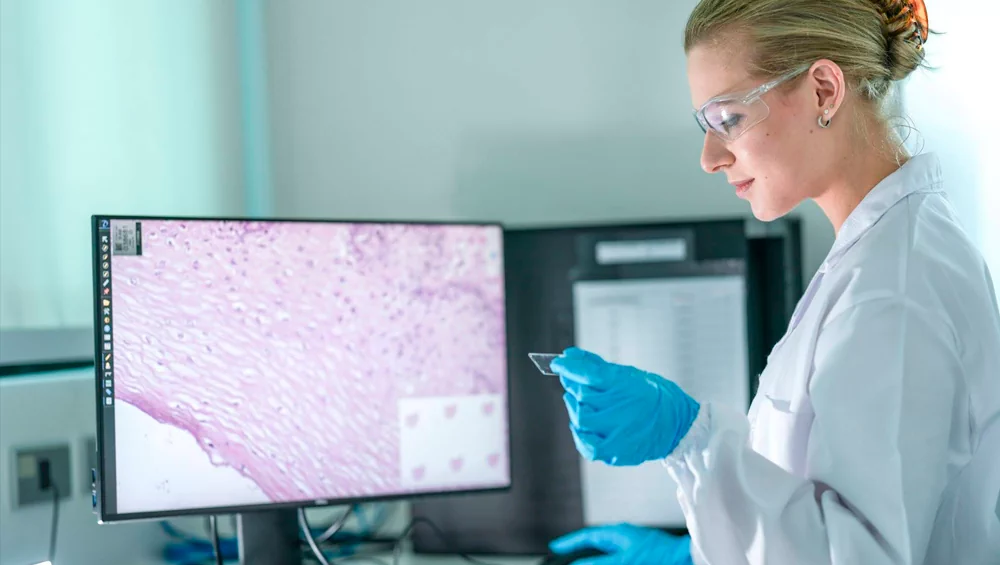
Modern medicine is undergoing a fundamental transformation. At the heart of these changes is digital pathology, which is becoming the foundation of "precision medicine." It enables the conversion of biological materials into a format suitable for big data and intelligent analysis. While pathologists previously worked solely with glass slides under a microscope, today they use high-definition monitors and smart algorithms. This is not just a technical change but a new philosophy of a physician's work.
What exactly is Digital Pathology?
It is a process where histological slides are converted into ultra-clear digital images using specialized scanners, after which they are stored in cloud repositories. This enables detailed analysis of samples, scaling, and the instant exchange of data with colleagues.
Unlike traditional diagnostics, which are limited by the physical properties of glass and human factors, digital technologies enable remote work, precise measurements, and rapid sample comparisons. Furthermore, the addition of Artificial Intelligence (AI) optimizes the process: the software performs a preliminary review of the material and prompts the doctor on which areas deserve special attention.
The Current State of Digital Pathology in Ukraine
Despite challenging conditions, Ukrainian medicine is becoming increasingly high-tech. Digital pathology is gradually entering daily practice: leading medical centers are switching to slide scanners and digital archives, rather than bulky glass cabinets.
Importantly, Ukraine is already creating its own digital solutions that are undergoing laboratory trials and accelerating diagnostics, particularly in oncology. The private sector plays a key role here, investing in innovation and stimulating the growth of medical IT technologies.
Problems Solved by Digital Pathology in Ukraine
- Staff Shortages: Ukraine faces a shortage of pathologists. Remote diagnostics enable one experienced specialist to consult with several hospitals simultaneously, regardless of their locations.
- Access to Expertise: Residents of remote regions can now receive a conclusion from top specialists without physically transporting materials. Telepathology makes quality care accessible even where sub-specialists are unavailable.
- Data Preservation During War: Digitalization allows patient information to be stored in secure cloud repositories. Even if a hospital suffers physical damage, a person’s medical history will not be lost.
Prospects for Digital Pathology Development in Ukraine
The future lies in full data integration. When pathology reports are united into a single system, the doctor receives a holistic clinical picture. This helps make better decisions faster and lays an excellent foundation for training interns and upskilling physicians.
Furthermore, the development of telemedicine is impossible without digital images. This allows for real-time consultations and the involvement of international experts, significantly improving patient outcomes.
The Role of Artificial Intelligence in the Future of Diagnostics
AI is already becoming a real assistant in Ukrainian medicine. Specifically, it helps through:
- Automation: AI performs routine calculations (e.g., the Ki-67 index for assessing tumor aggressiveness), freeing up the doctor’s time.
- Early Cancer Detection: Algorithms detect atypical cells that a human might miss due to fatigue.
- Archiving and Security: Digital copies do not deteriorate and can be stored for decades, which is vital for monitoring disease dynamics. For young specialists, digital image libraries are an invaluable resource for learning from rare clinical cases.
- Centralization: Scanning systems in large centers allow smaller hospitals to obtain high-quality diagnoses remotely.
Benefits and Challenges
Digitalization makes diagnostics faster and more accurate, and an expert “second opinion” accessible to everyone. However, challenges remain: the high cost of equipment, the need for powerful internet and data storage, difficulties in integrating digital pathology into hospital systems, and the need for staff retraining. But the experience of radiology (X-rays and MRI), which has already gone digital, proves that this transition is logical and necessary.
Digital pathology is not about replacing the microscope with a screen. It is an additional tool that brings medicine closer to the person. The future is already here, encoded in high-definition pixels.
Contribution of the Association of the Evolution of Medicine
Our Association actively promotes the use of digital technologies in Ukraine. We conduct webinars and conferences so that doctors know how to use innovations. On our YouTube channel, you will find recordings of events dedicated to digital pathology (masterclasses and roundtables with industry experts). Specifically, at the III Annual Scientific-Practical Conference, “Modern Morphology: Challenges and Achievements,” held jointly with world-renowned pathologists from the British Royal College of Pathologists and leading Ukrainian clinics, digital pathology was discussed in detail, and proposals for its implementation were submitted to the Ministry of Health.
So, is Ukraine Ready for Digital Pathology?
Ukraine has a unique opportunity to implement these innovations right now, bypassing outdated stages. The activities of startups, NGOs, and medical professionals themselves indicate that the mass adoption of “digital” in laboratories is imminent over the next few years. This is a technology that saves lives. Join the Association of the Evolution of Medicine, and let’s develop modern medicine in Ukraine together!
A blog on MEDplus is an author’s work that reflects only the author's personal opinion. The text does not claim to be fully objective or provide a comprehensive view of the topic but represents the expert’s subjective perspective within the framework of evidence-based medicine.
The MEDplus editorial team is not responsible for the accuracy or interpretation of the information presented. The platform serves as a space for professional knowledge exchange and experience sharing.
Do you like the article?
Ratings: 0